The Spanish Regulatory Framework
Building an underground shelter in Spain requires navigating a multi-layered regulatory framework that includes national building codes, regional regulations, and local municipal ordinances. Unlike Switzerland or Finland, Spain does not have specific legislation for nuclear shelters — underground construction is regulated under the general building code with additional provisions for subterranean structures.
The CTE: Spain's National Building Code
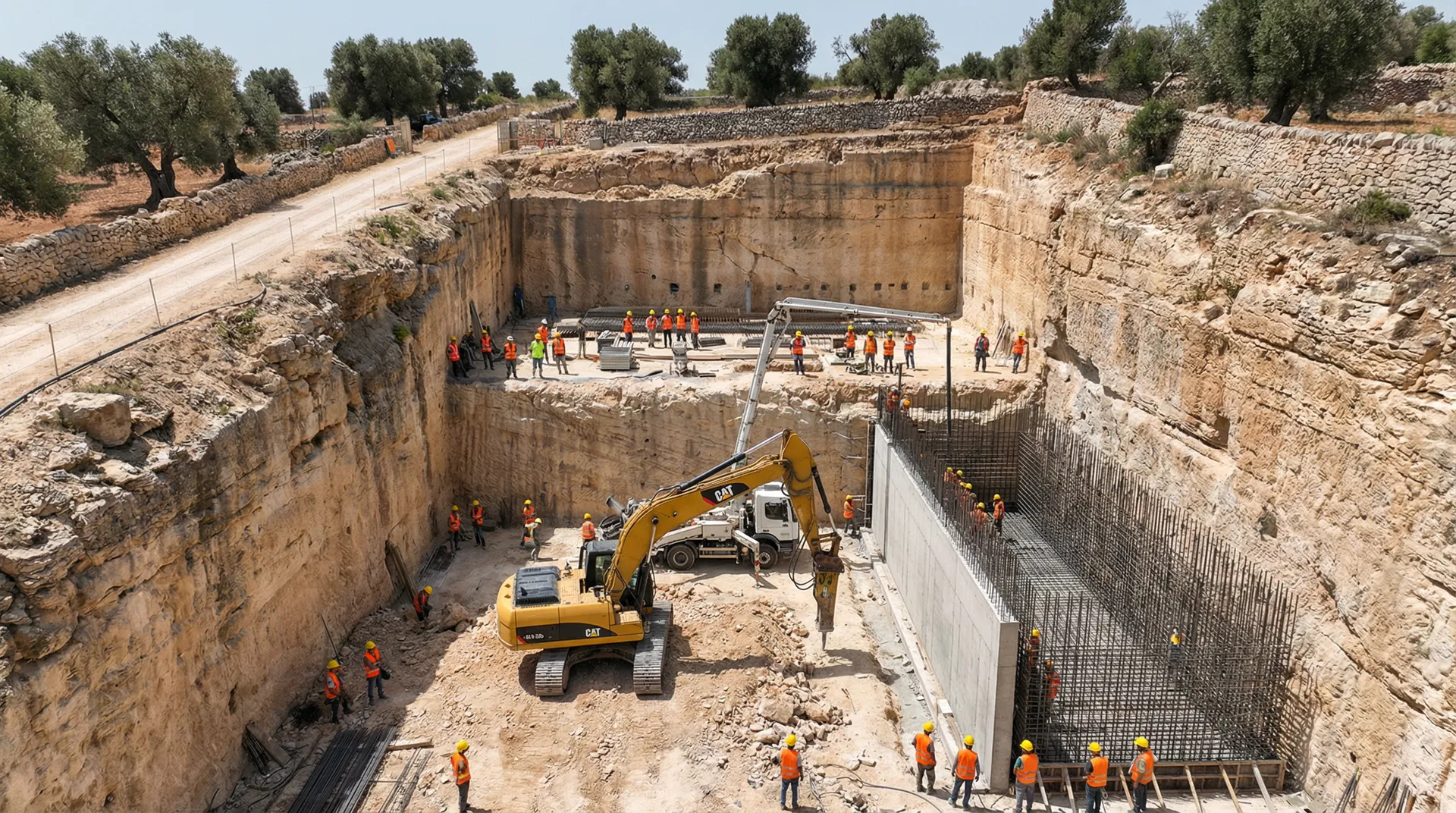
The Código Técnico de la Edificación (CTE) is Spain's primary building regulation, equivalent to the UK's Building Regulations or Germany's DIN standards. The CTE covers structural safety (DB-SE), fire safety (DB-SI), health and hygiene (DB-HS), energy efficiency (DB-HE), and noise protection (DB-HR). For underground construction, the most relevant sections are DB-SE (structural safety), which requires specific calculations for earth pressure, hydrostatic pressure, and seismic loads; DB-HS (health and hygiene), which mandates ventilation requirements, waterproofing standards, and drainage systems; and DB-SI (fire safety), which requires fire-resistant materials, emergency exits, and fire suppression systems.
Balearic Islands Regional Regulations
The Balearic Islands have additional regional building regulations that apply on top of the national CTE. Key provisions include land classification restrictions (urban, rural, and protected rural zones each have different building allowances), maximum built area limits (protected rural land limits enclosed space to 900m²), height restrictions (underground structures count toward total built volume in some municipalities), and environmental impact requirements (mandatory for rural zone construction).
The Permit Process in Mallorca
Building a bunker in Mallorca requires a Licencia de Obra Mayor (major works license) from the local Ajuntament (town hall). The application must include architectural plans signed by a colegiado architect registered with the Balearic Islands College of Architects, structural engineering calculations certified by a qualified engineer, a geological survey of the site, an environmental impact assessment (for rural properties), and proof of property ownership and land classification. Processing time is typically 2-4 months, though complex projects on protected land may take longer. The Ajuntament may require additional documentation or modifications before granting the license.
Protected Land Considerations
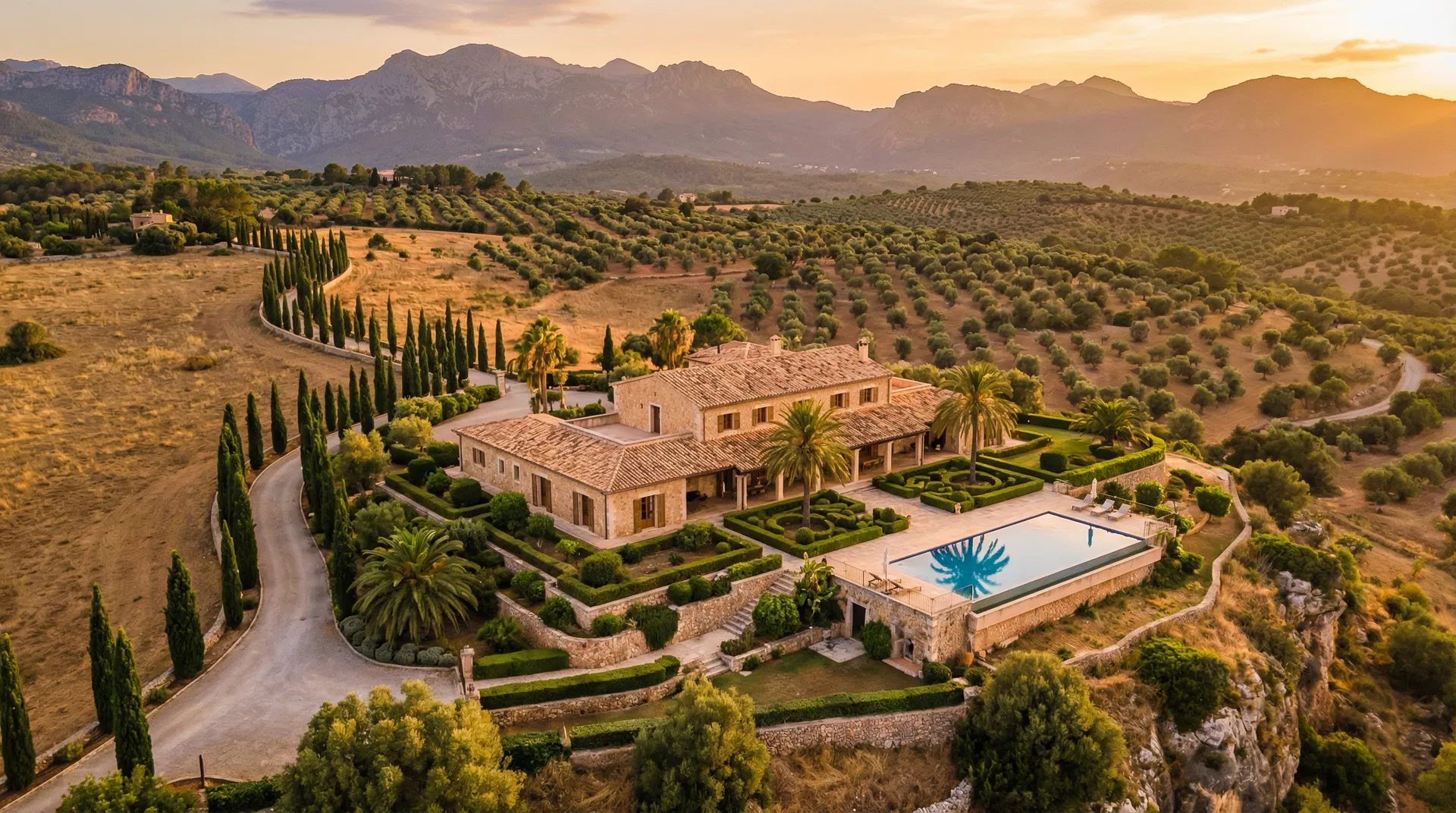
Much of Mallorca's most desirable land — particularly in the Serra de Tramuntana and coastal areas — is classified as rústico protegido (protected rural). Building on protected land is subject to additional restrictions including maximum enclosed space of 900m², mandatory environmental impact assessment, restrictions on visible external modifications, and additional review by the Consell de Mallorca (island council). However, underground construction that does not alter the surface landscape may receive more favorable treatment than above-ground construction on protected land.
How Mallorca Bunkers Navigates the Process
At Mallorca Bunkers, we handle the entire regulatory process on behalf of our clients. Our in-house team includes colegiado architects registered with the Balearic Islands College of Architects, structural engineers with specific underground construction experience, environmental consultants familiar with Balearic Islands regulations, and legal counsel specializing in Mallorca property and construction law. We have successfully obtained permits for bunker construction across multiple municipalities in Mallorca, including projects on protected rural land.