An Island Built for Building Underground
Mallorca's geological history has created conditions that are remarkably favorable for underground construction. The island is primarily composed of Mesozoic limestone — rock that has been forming, folding, and dissolving for over 200 million years. This geological heritage provides natural advantages that make Mallorca one of the best locations in Europe for bunker construction.
The Serra de Tramuntana: Mallorca's Geological Backbone
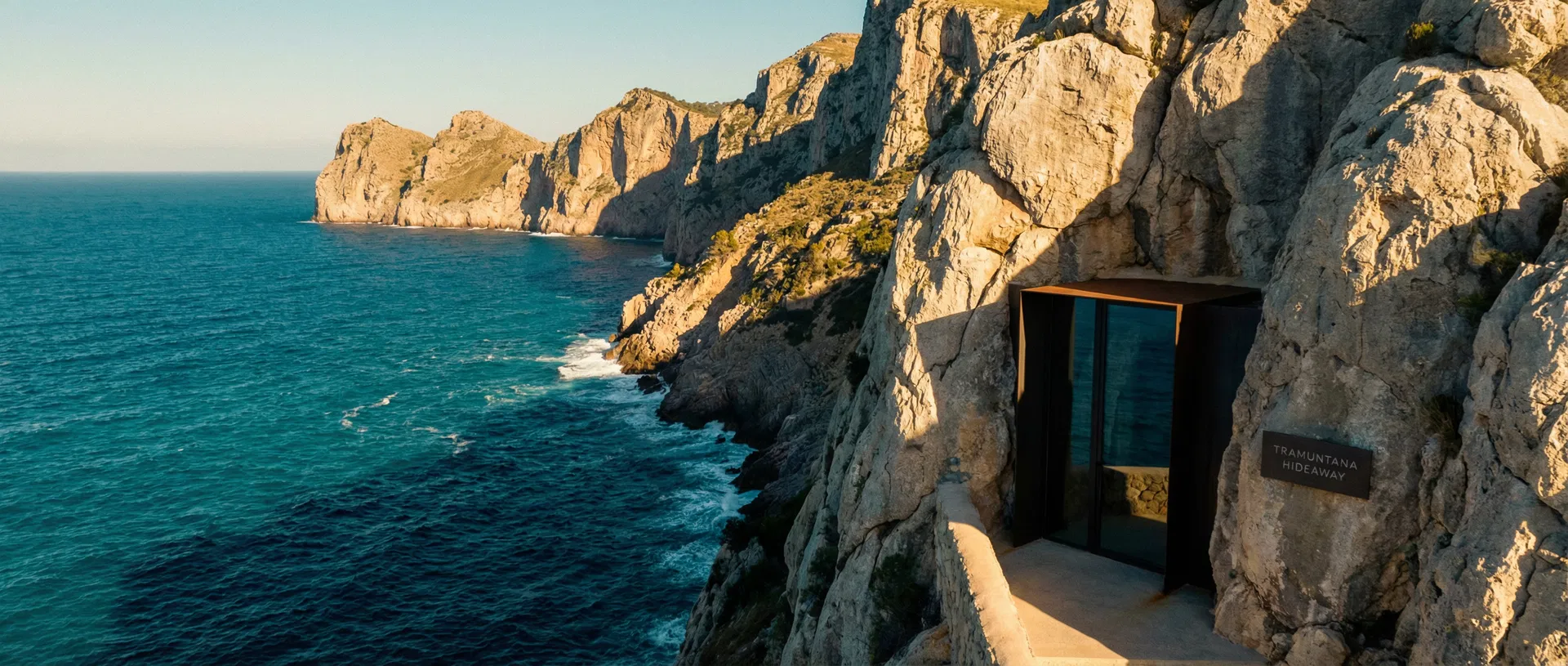
The Serra de Tramuntana mountain range, running along Mallorca's northwest coast, is composed primarily of Jurassic and Cretaceous limestone. This rock has been karstified — naturally dissolved by water over millions of years — creating an extensive network of caves, sinkholes, and underground channels. For bunker construction, karstified limestone offers several advantages: the rock provides excellent natural structural support with compressive strength typically exceeding 100 MPa, existing cavities can be expanded rather than excavated from scratch (reducing costs by 20-40%), the limestone's porosity aids natural drainage (reducing waterproofing requirements), and the rock is softer than granite (easier and cheaper to excavate) while still providing excellent structural properties.
The Serra de Tramuntana is a UNESCO World Heritage Site, which means surface construction is heavily restricted. However, underground construction that does not alter the landscape may receive more favorable treatment — making bunkers an ideal use of this protected but geologically ideal terrain.
The Central Plain (Es Pla)
Mallorca's central plain is composed of softer Miocene sedimentary rock — primarily marls, sandstones, and younger limestones. This geology is easier to excavate (reducing construction time and costs) but requires more structural reinforcement than the harder Tramuntana limestone. The water table in the central plain is generally deeper than coastal areas, which is favorable for underground construction. Es Pla is ideal for larger bunker installations where ease of excavation is prioritized over natural rock strength.
Coastal Zones: Challenges and Solutions
Mallorca's coastal areas present the greatest challenges for underground construction. High water tables (sometimes as shallow as 2-3 meters below surface) require extensive waterproofing — typically a combination of external membrane waterproofing, internal tanking systems, and active drainage with sump pumps. Saline groundwater in coastal areas is also more corrosive to concrete and steel, requiring marine-grade materials and cathodic protection systems. Despite these challenges, coastal bunker construction is entirely feasible with proper engineering — and many of Mallorca's most desirable properties are located in coastal areas.
Seismic Stability
Mallorca sits in a zone of low to moderate seismic activity. The island experiences occasional minor earthquakes (typically magnitude 2-3) but has not experienced a damaging earthquake in recorded history. For bunker construction, this means standard seismic design provisions are sufficient — no special earthquake-resistant engineering is required beyond CTE requirements. This is a significant advantage over locations like Italy or Turkey, where seismic design adds substantial cost and complexity.
Our Geological Survey Process
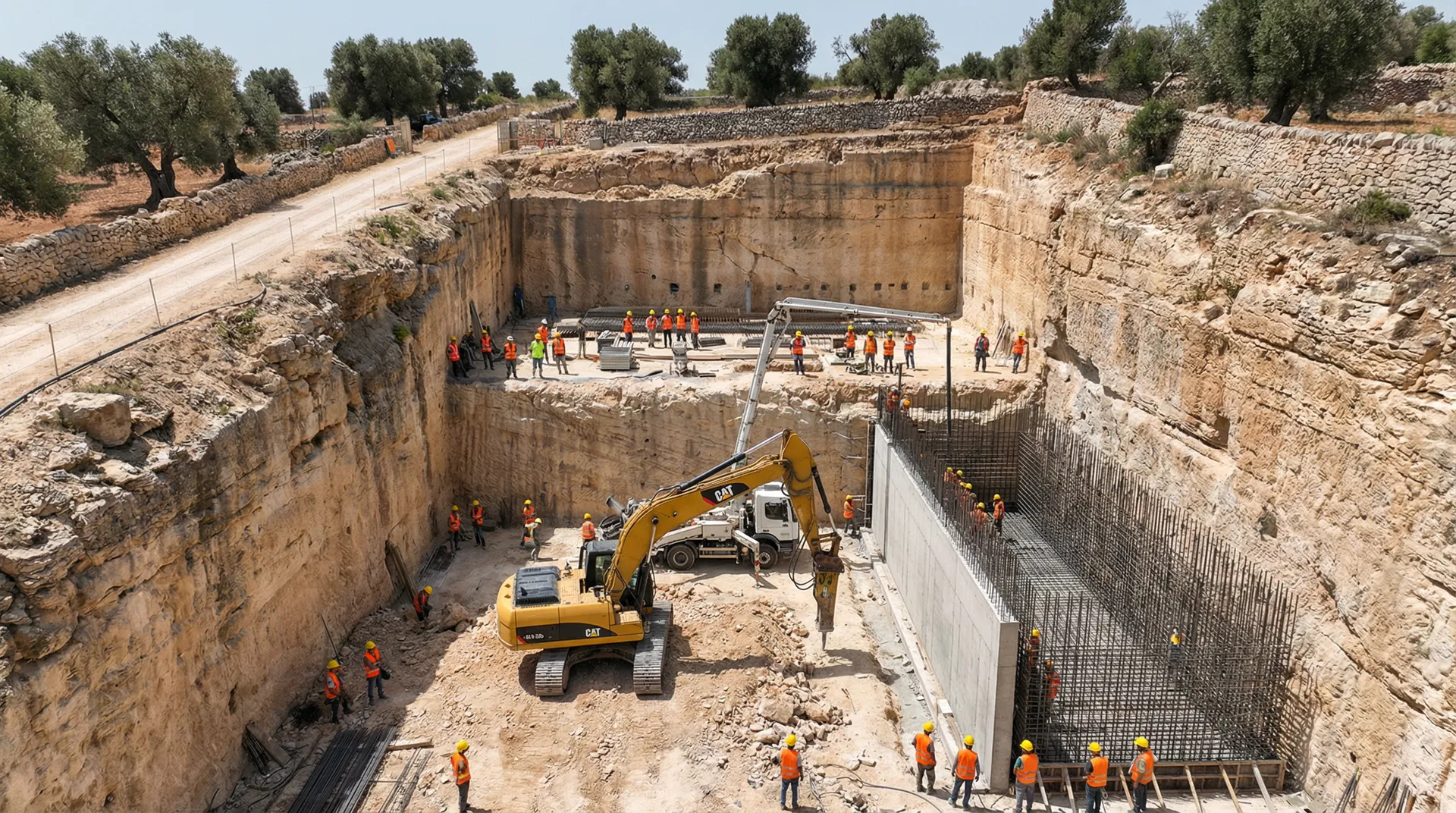
Every Mallorca Bunkers project begins with a comprehensive geological survey including ground-penetrating radar (GPR) to map subsurface conditions, borehole drilling and core sampling to determine rock properties, hydrogeological assessment to map water table levels and flow patterns, and geotechnical testing to determine bearing capacity and excavation characteristics. This data informs every aspect of the bunker design — from structural specifications to waterproofing requirements to excavation methodology.